


AURORA, Colo. (CN) - For a time in elementary school, my hilltop backyard overlooked SeaWorld San Diego's nightly fireworks show.
In college, I lived close enough to a police academy shooting range to hear the hollow pops of gunshots daily.
Living in Aurora, Colorado's Del Mar Parkway neighborhood a decade later, being able to distinguish between the two sounds unfortunately comes in handy.
Fireworks open with a wide, aerial boom, and they often come in sets. The sound that wakes me in the dead of night isn't usually fireworks. Instead, it's all too often the unmistakably heavy sound of one human trying to end another's life.
When the sound draws too close for comfort, I grab my kids and dash into the basement.
All the brick houses in my neighborhood have basements, ostensibly to protect us from tornadoes, but those are mythically rare here. If only gunshots were equally uncommon.
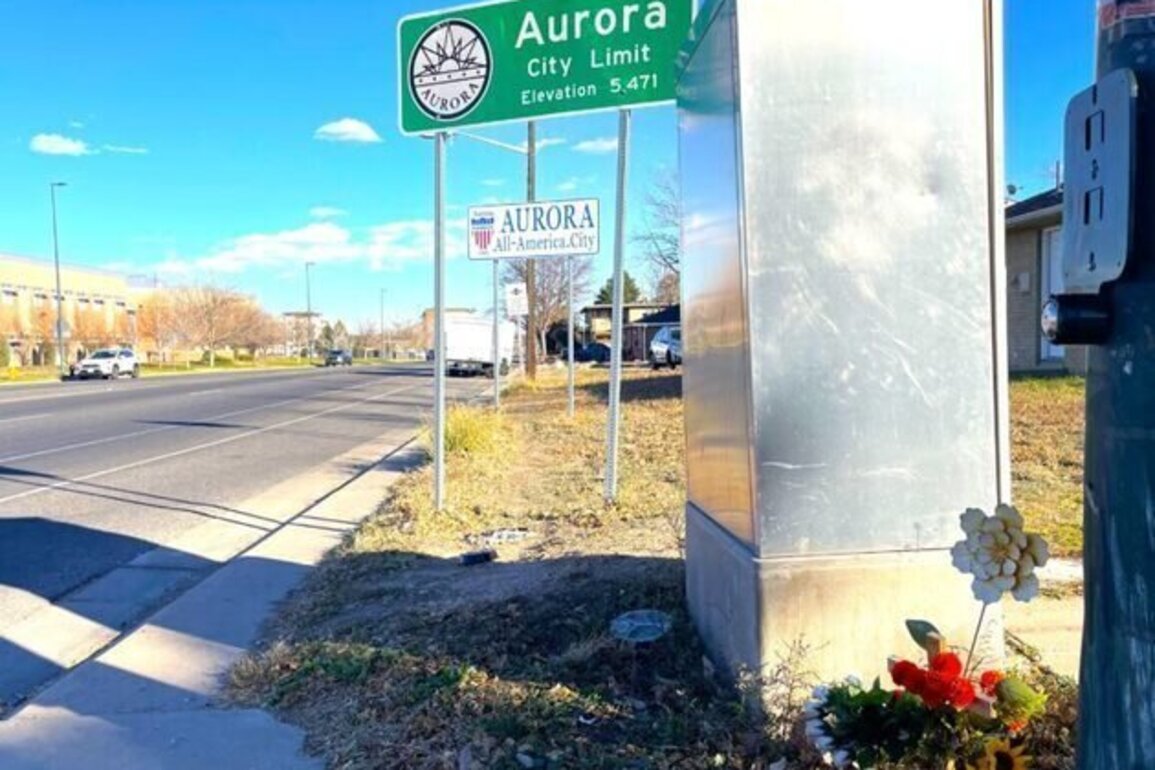
Signs at the Denver city line declare Aurora an "All-America City," referring to an old civic award. It's a fitting description for this working-class melting pot, where a third of residents are bilingual and a fifth were born outside the U.S.
Living up to the name, Aurora is prone to all of America's promises and problems, including gun violence. Although not the most dangerous city by national standards, it has stood out in another troubling way: The city's crime rates have consistently risen over the past decade, even as crime rates nationally and in many other major American cities have fallen.
Until 2022, that is. That year, for whatever reason, crime stalled in Aurora, then started to decline.
Today, overall crime is three-fourths of what it was in 2022. Violent crime has fallen 18%. Rape, robbery and murder are all at five-year lows. So far, 2025 looks to be a continuation of that positive trend, with just 33 reported crimes per day compared to 55 in 2022.
Over the last five years, Aurora lawmakers, police officers, nonprofits and even car manufacturers have advanced their own solutions to curb crime. The results are apparent from my own home, where I've been hearing far fewer gunshots at night.
After a quiet summer, I found myself asking the same question as many civic leaders: What's working?
As I dug into the answer, I encountered a problem that has long frustrated academics and policymakers: It's notoriously difficult to sort out what causes crime. Even the surge and drop in national crime rates from the 1970s to 2000s has been attributed to everything from leaded gasoline to abortion restrictions.
Though a definite answer is hard to pin down, that hasn't stopped people in Aurora from pursuing an array of solutions. Some of them are surprisingly simple: better locks, brighter lights and basketball games.
A couple years ago, the Centennial State was number one in the country for car thefts. In 2022, about 16% of all cars stolen in Colorado were stolen in Aurora, even though the city accounts for less than 7% of the state's population.
More than 41,000 cars were stolen in the state that year - and Kias were particularly vulnerable. Viral TikTok videos offered quick and easy hotwire guides, showing how with nothing but a flathead screwdriver, a thief could easily start an engine and speed away.
City and state leaders cracked down.
Aurora's city council approved mandatory 60-day minimum jail sentences for car thieves. In 2023, a state law change made all car thefts felonies, closing a loophole that had classified auto theft as a misdemeanor if the vehicle was worth less than $2,000.
Although critics question the efficacy of tough-on-crime policies, local prosecutors and police argue the policy changes helped capture some of the worst offenders.
Multiagency investigations went after car-theft rings. A total of 175 charges were filed against just 19 defendants, including in a scheme targeting trucks at the nearby Denver International Airport.
In Aurora, car thefts fell sharply, from 6,781 in 2022 to 3,545 last year. Although the city still has car thefts, the rate is about half of what it was just three years ago.
The crackdown on car thefts came as state leaders faced growing pressure to do something about the problem, said Mitch Morrisey, former district attorney for the state's Second Judicial District in Denver and a criminal-justice fellow at the Common Sense Institute, a Colorado think tank.
"The governor and the attorney general were running for reelection," said Morrissey, a Democrat. "Every time they got in front of a crowd, somebody started asking them why Colorado was number one in auto thefts."

Aurora Police Chief Todd Chamberlain, who took over the department last year, also attributes a drop in infractions to tough-on-crime tactics.
When people don't face consequences for crimes, Chamberlain argues they're more likely to continue committing them. Or, as he puts it: "A driving force of crime is where people can get away with things."
Last year, Chamberlain changed the rules on when police should initiate car chases, including by directing cops to pursue suspected car thieves. Since that change, Aurora police have had at least 200 chases, involving not just car thieves but those suspected of other crimes including weapons offenses.
Police chases are highly controversial. Critics say they're extremely dangerous and question if they work at all. This year, the Denver Post reported that one-in-five Aurora police pursuits resulted in injury.
Even so, Chamberlain stands by the updated rules. Without immediate repercussions, he says "people think, 'Hey, I can go into Aurora and steal cars, and all I got to do when they turn on the lights is just drive away.'" A department spokesperson likewise defended the practice, saying officers prioritize safety and will abandon a pursuit if it poses a risk to bystanders.
As tempting as it is to attribute declining car theft rates to increased penalties, another relevant and significant change rolled out in recent years.
That change - drumroll, please - captured few headlines and has little to do with public policy.
The same year that car thefts began declining, the makers of two of the most commonly stolen cars in Colorado - Kia and Hyundai - released software and physical upgrades preventing vehicles from being driven off without a key in the ignition. Following these changes, the Insurance Institute for Highway Safety reported theft rates for these vehicles dropped sharply, with a 53% decline nationwide from 2022 to 2023. Chamberlain acknowledges that alongside policework, these upgrades had an impact.
"That is another factor," he said with a chuckle.
The fact that auto thefts could be so impacted not by criminal-justice policies but by simple engineering highlights a vexing problem for those who study crime: It is difficult to pinpoint cause-and-effect.
After all, it's much harder to study crimes that never happened.
While the justice system focuses on the aftermath of crimes, everything that happens beforehand is when prevention strategies can have a real impact. And as Kia and Hyundai have clearly demonstrated, fixing vulnerable systems can be just as important as securing arrests and convictions.
Aurora made national news last summer for all the wrong reasons. On social media, viral videos showed armed men storming the hallways at the Edge of Lowry apartments.
Within weeks, then-presidential candidate Donald Trump declared that Tren de Aragua, an until then little-known Venezuelan gang, had taken over the city. Vying for votes in a conference room on the city's outskirts, he promised a relentless mass-deportation plan dubbed "Operation Aurora."

Following Trump's visit last October, local and federal law enforcement have arrested dozens of people accused of having ties to the gang.
In the wake of a sting operation in February, federal agents raided the Ivy Crossing apartments just outside city limits. Prosecutors levied charges against 20 people, ranging from drug possession to murder-for-hire.
As these defendants await trial, it's worth noting studies have consistently shown that immigrants commit crimes at lower rates than native-born Americans. Immigration authorities under Trump have not focused on criminals but on migrants in general.
And yet just like with Kia and its software upgrades, there were quieter and more impactful changes happening beneath the surface, in the form of enforcement actions against dangerous and negligently managed apartments.
In February, Aurora shut down the Edge of Lowry complex. Its former owner, New York-based CBZ Management, also faces lawsuits from former tenants.
Years before the viral Tren de Aragua video, the Edge of Lowry had been plagued by complaints. Among them: rats, cockroaches, mold, loss of heat and hot water, broken doors and crumbling balconies.
The rent was cheap, but tenants paid the price for it - and in a sense, so did all of Aurora. Run-down and poorly managed apartments like this one can be magnets for crime, Deputy Jason Presley, a crime prevention specialist at the Arapahoe County Sheriff's Office, said in a phone interview.
Presley cited another former hotspot for crime in the area: the Ivy Crossing apartments. It was also managed by CBZ, which is now under a state AG investigation over claims it violated housing laws.
New management took over, investing in security and other upgrades, including 125 security cameras. With service calls dropping 75%, whole days can go by without a single law enforcement visit to the building.
"This [new] management group, they've come in and they're like, 'We want to make it a desirable place so people want to live here,'" Presley explained.
Sometimes, reducing crime can be as simple as trimming trees and installing LED lights.

"If it's well-lit and it looks like it's taken care of, a lot of times [criminals] will stay away from it," Presley said.
And yet for some Americans, public safety is about more than catching criminals. It's also about making sure police treat communities with respect and do not resort to violence or deadly force unless absolutely necessary.
MiDian Shofner, a local activist who founded the nonprofit Epitome of Black Excellence & Partnership in 2023, has seen both sides of the crime issue. Growing up in Denver's Montebello neighborhood, she watched as both drug abuse and zero-tolerance policies reshaped her community for the worse. But even as crime has fallen nationally, she says Black Americans continue to wrongfully die at the hands of cops. In Aurora, some noteworthy examples include the deaths of Elijah McClain in 2019 and Kilyn Lewis just last year.
Like other experts interviewed for this story, Shofner doesn't have an easy fix for crime. But just as Kia's car upgrades lowered theft rates, Shofner argues that lasting public safety requires holistic, thoughtful solutions. It's not as simple as putting bad guys behind bars.
"The Black community is overlooked when it comes to matters of investment and matters of opportunity," Shofner said. "What we are not overlooked on is how we are policed." With investments in the former, she thinks reductions in crime naturally follow. "I truly believe that communities have always known how to heal."
Police pursuits, tough-on-crime policies, anti-theft devices in cars, apartment complex upgrades and community development.
Through the course of my reporting, various experts cited these wildly different influences or some combination as the major factors driving down crime.
For a tie-breaker, I called up David Pyrooz, a University of Colorado Boulder professor who has spent the last decade studying crime in the Denver metro.
Alas, he would not moonlight as a referee.
"Whether it's violent or nonviolent, it's difficult to attribute it to any one factor," Pyrooz reminded me. "That's a typical story for crime reduction, as well as crime increases."
Over the past 10 years, Pyrooz has documented the positive impacts of programs designed to reduce recidivism and gang violence across the Denver metropolitan area.
Although he found decreases in policing during 2020 correlated with increased crime, he says no level of incarceration can eliminate crime. Still, he does see promise in a new wave of programs designed to address crime's root causes - poverty, lack of opportunity, domestic violence - without relying on the criminal justice system.
"Over the last five years, people were pointing to more structural changes that needed to be put into place to build healthier communities," Pyrooz said. And yet he attributes the recent paradigm shift "as practically solely related to the murder of George Floyd."
Five years after Floyd's murder by police, polling by the Pew Research Center shows few Americans believe lasting change has been implemented. But Colorado lawmakers have made real reforms, passing legislation that blocks law enforcement from using qualified immunity as a defense in state civil claims and investing funds into community-level crime prevention. They even opened an Office of Gun Violence Prevention within the state's health department.
Community programs serving Aurora received millions of dollars in new grant funding.
One of those programs, bankrolled with a $1.9 million Department of Justice grant and local marijuana sales taxes, is Aurora SAVE, short for "Stand Against Violence Every Day."
The SAVE team - which includes police, social workers and community advocates - aims to intervene when a young person is considering gun violence.
"If you literally focus on the people who are at the highest risk of either perpetration or victimization, that you can see dramatic decreases in gun violence," explained Lisa Battan, intervention programs manager for Aurora.
Battan started her career as a victims advocate for the Aurora Police Department. In that role, she often wondered why young defendants committed crimes.
Reading case files, she noticed patterns. Before a young person committed a violent crime, she usually found a history of interactions with the criminal justice system, often as a victim or witness in another case. "It just got me thinking, what can we also be doing more at the macro level to intervene before we're getting to this point where I'm doing a death notification on a 13-year-old who was shot and killed?"
The SAVE team approaches individuals who fit the profile of someone likely to engage in retaliatory gun violence, presenting them with a carrot and a stick.
The carrot is an offer to connect them to community resources like food, employment or education. The stick is a promise to prosecute those who still choose violence.
"People who didn't choose to make a change, they are now incarcerated," Battan said. "That is the reality." Although researchers like Pyrooz are still analyzing the program's impact, Batton noted that even a single successful intervention translates to "one less family experiencing victimization."
Following several youth-involved shootings in city parks and on school grounds in 2021, the Aurora City Council chose an option besides harsher penalties.
Instead, it funded grants to support groups like the Boys & Girls Clubs of America and A1 Boxing Academy. In 2022, the city also made recreation centers free for teens on school break and stocked them with nutritious meals.
As city schools went out of session this October, the basketball courts at Central Rec Center filled with casually clad teens. They pocketed snacks and practiced their shots.
"Kids just need to be themselves," said Ethan Vansickle, an Aurora youth recreation specialist. They need to "goof off with their friends and have a good time [in a setting] where it's not serious like in school."
While there's no easy way to quantify the impact of a single basketball game on violence reduction, sometimes it is enough to make staying out of trouble fun.
Meanwhile, programs like SAVE are working to break cycles of violence at an early age, activists like Shofner are challenging city officials on police use-of-force cases, and car companies are making their products harder to steal. Each small stone tossed into the pond has a ripple effect, culminating into bigger waves of change.
Whatever the solution, something seems to be working. Crime rates are down, and in recent months, the soundtrack of gunshots has fallen mostly silent in my neighborhood. I hope this means the song is over, though I fear it's just a pause between tracks.
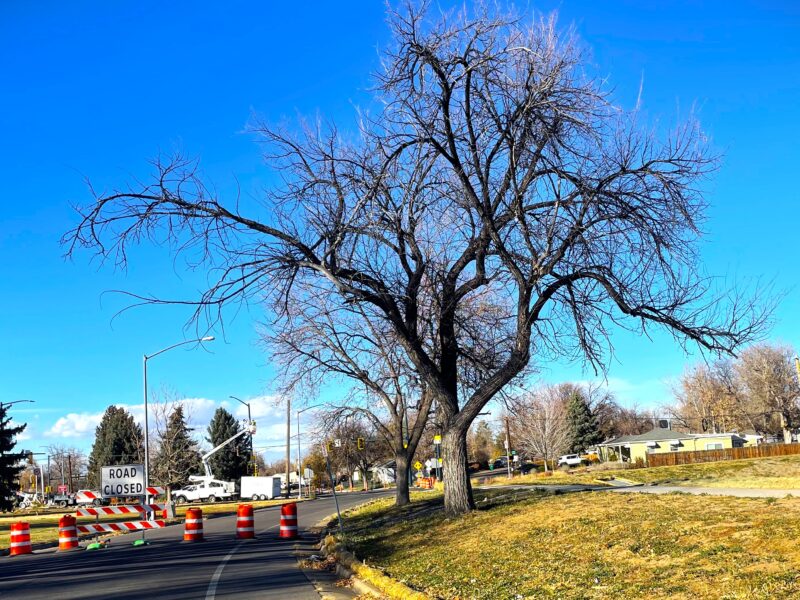
I confided in Pyrooz that I had my own pet theory: Perhaps crime had subsided because road construction cut off access to a nearby park. I worried the peaceful nights would end when the project does.
Humoring my theory, Pyrooz offered some validation: I was hardly the only parent eager for solutions to make my neighborhood safer.
"One of the most frustrating things for parents is living so close to those parks and being unable to use them because you're worried about needles," Pyrooz agreed. "You're worried about gunfire and poor upkeep."
In hopes of providing lawmakers with better data moving forward, Pyrooz has proposed opening a research institution dedicated to studying Colorado's crime problems and possible solutions.
Regular people don't have to wait for changes in leadership and laws, he said. In fact, the best crime prevention actually starts at home, where one can start building the kind of community that one wants to live in.
"It's not government," Pyrooz said; "it's organizations that take responsibility for communities." Parents, good neighbors and recreational activities: "Those are the things that really contribute to violence reduction."
Source: Courthouse News Service